How it works

How a task becomes a pull request

One execution per task, then gone, in your own cloud project. The run record and the PR remain; the container does not.

Get startedCaps and costs

The run, end to end

1Your agentFan out these threebug fixes.2FugaroOne run per piece,each with aself-contained task3Ephemeralcloud jobin your own cloudprojectCloud Run job perrepository workflowone execution pertask, then gonebootstrapimplementverifyreviewfixwriteback4Pull requesta draft opens atthe first push(marked notverified)Spend caps watch the whole runA run halts when its next call's worst case would pass the capruns also share daily caps per repository and projectThere is no Fugaro service in between: it uses your Google Cloud project and your model credentials

The same, in words

  1. Your agentFan out these three bug fixes.
  2. FugaroOne run per piece, each with a self-contained task
  3. Ephemeral cloud jobin your own cloud project Cloud Run job per repository workflow one execution per task, then gone
  4. Pull requesta draft opens at the first push (marked not verified)
  5. Spend caps watch the whole runA run halts when its next call's worst case would pass the cap runs also share daily caps per repository and project There is no Fugaro service in between: it uses your Google Cloud project and your model credentials

Also true of a run

The four levels

A dashed outline is a part that is planned rather than built.
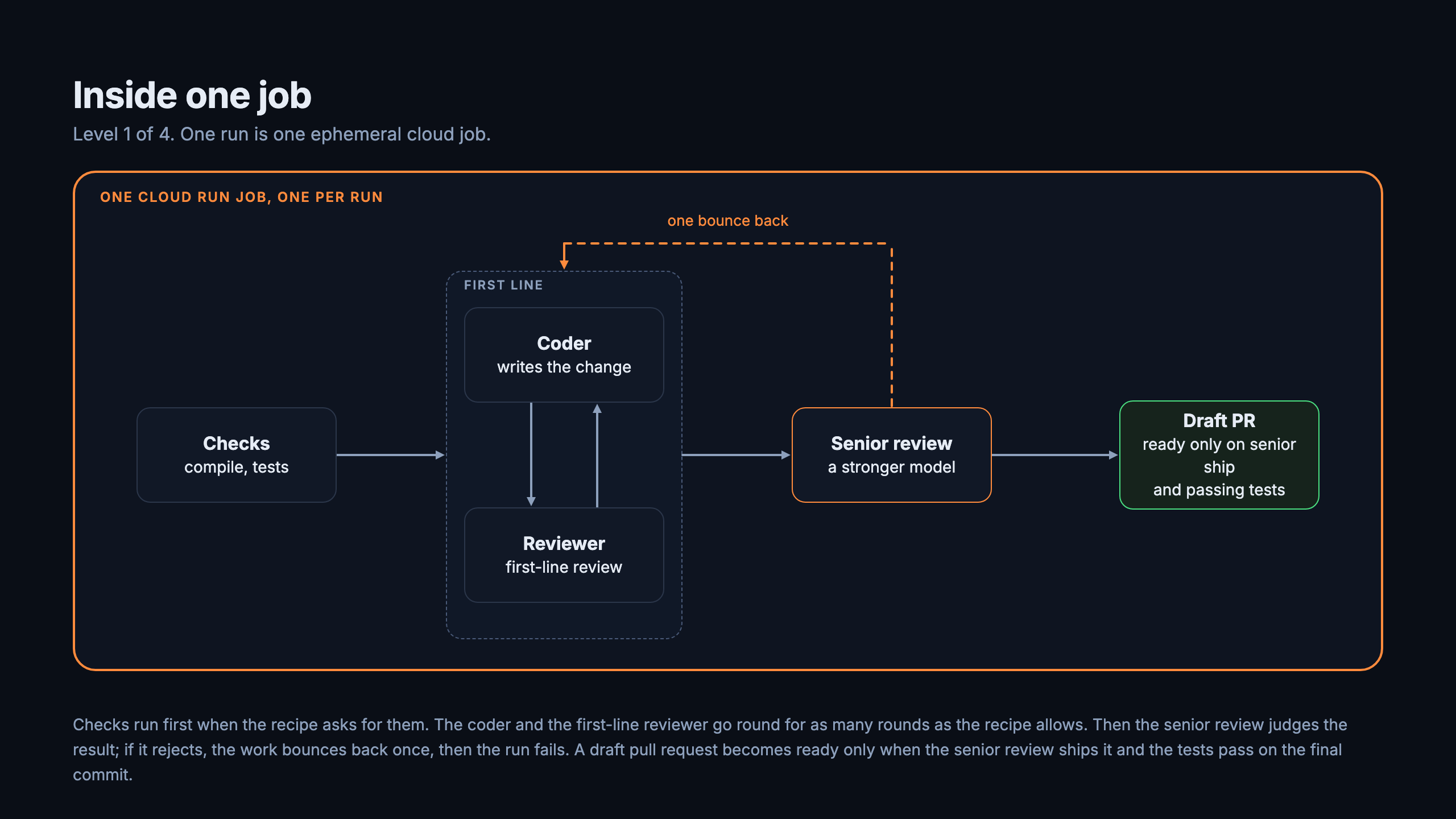
Level 1 of 4, inside one job. One run is one ephemeral cloud job. Checks run first when the recipe asks for them; the coder and the first-line reviewer go round; then a senior review judges the result and a draft pull request becomes ready only when it ships and the tests pass on the final commit.
Inside one job
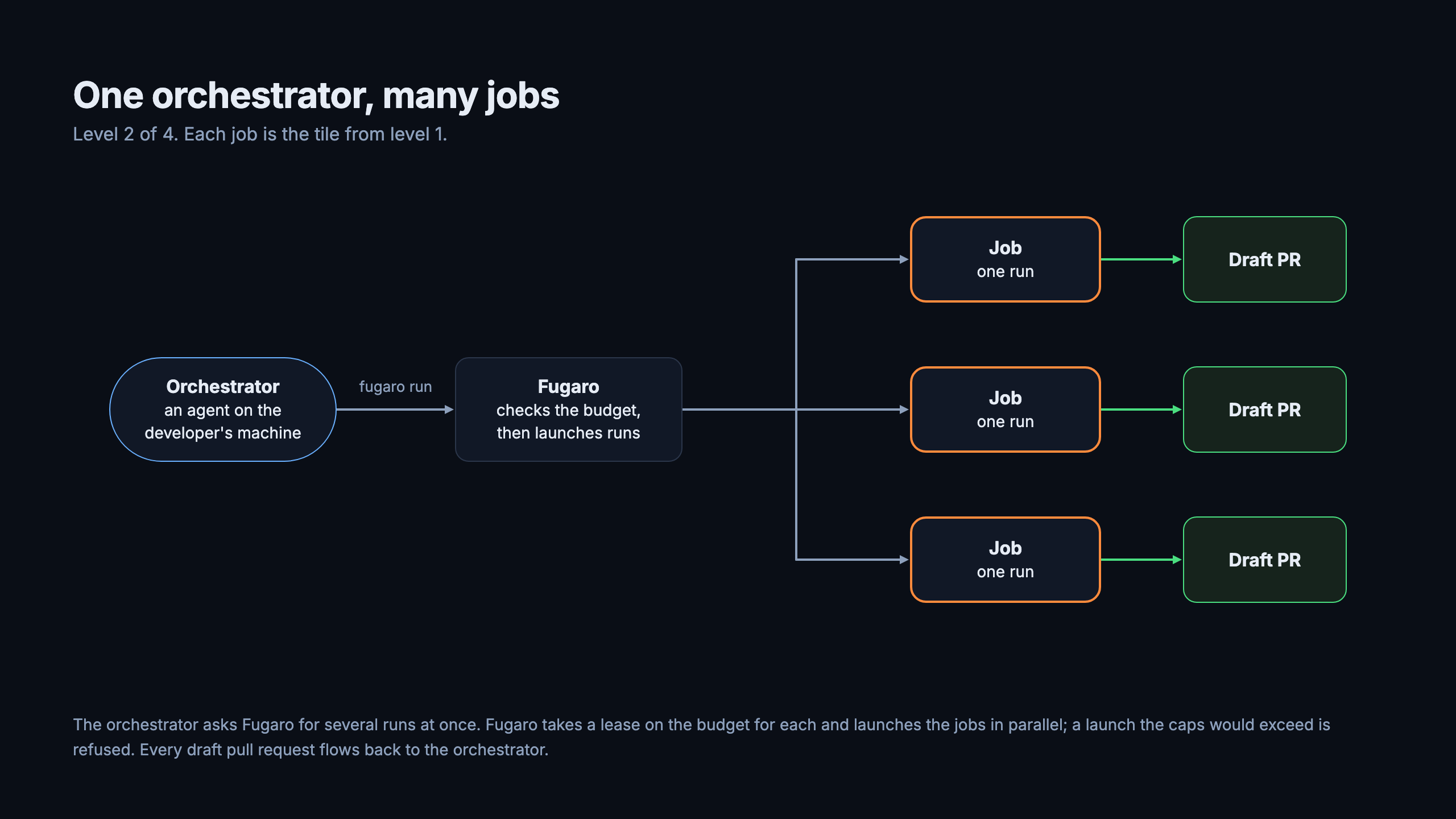
Level 2 of 4, one orchestrator, many jobs. The orchestrator on the developer’s machine asks Fugaro for several runs; Fugaro checks the budget and launches the jobs in parallel; every job opens a draft pull request that flows back to the orchestrator.
One orchestrator, many jobs
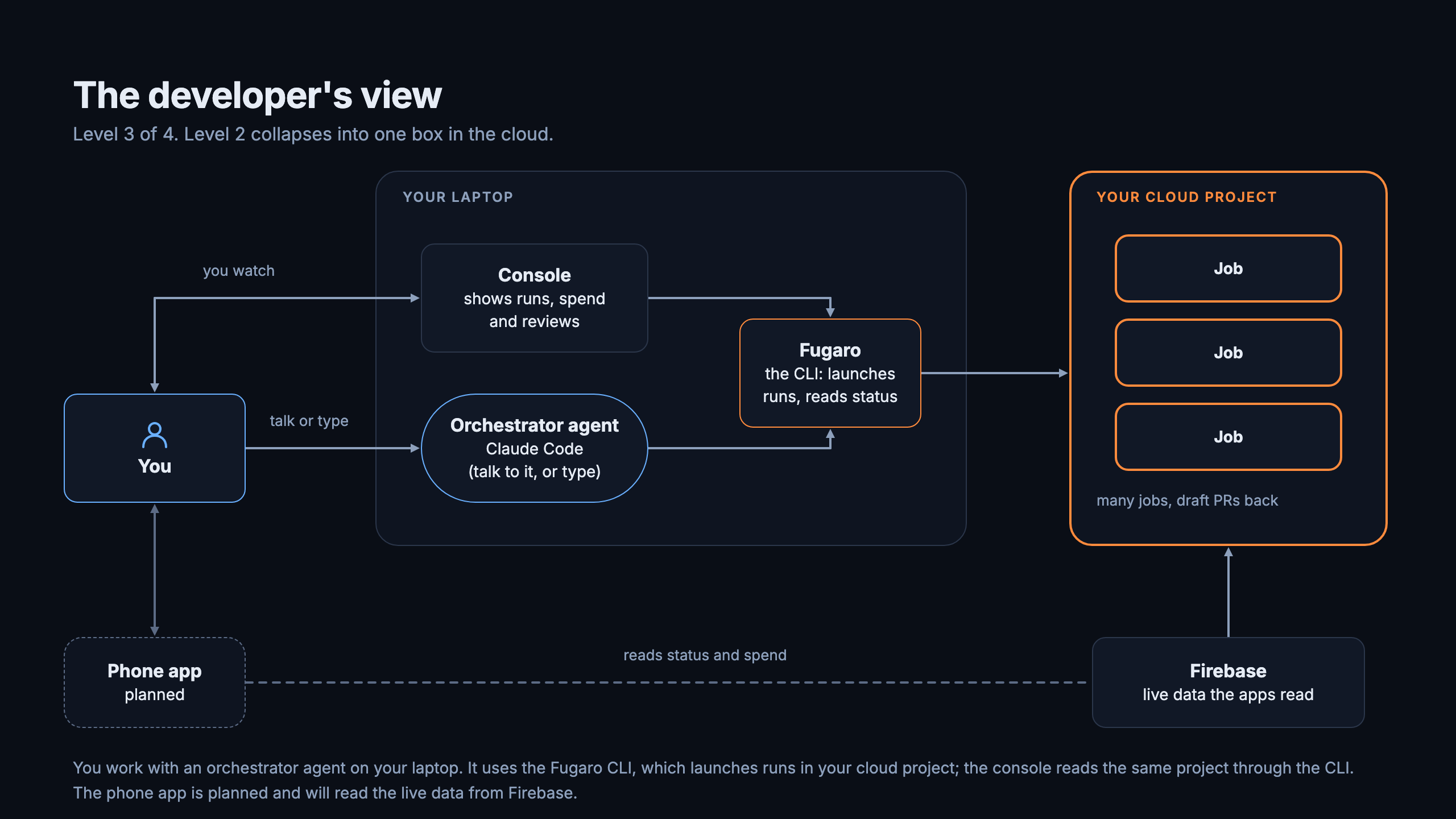
Level 3 of 4, the developer’s view. You work with an orchestrator agent on your laptop. It uses the Fugaro CLI, which launches runs in your cloud project; the console reads the same project through the CLI.
The developer’s view
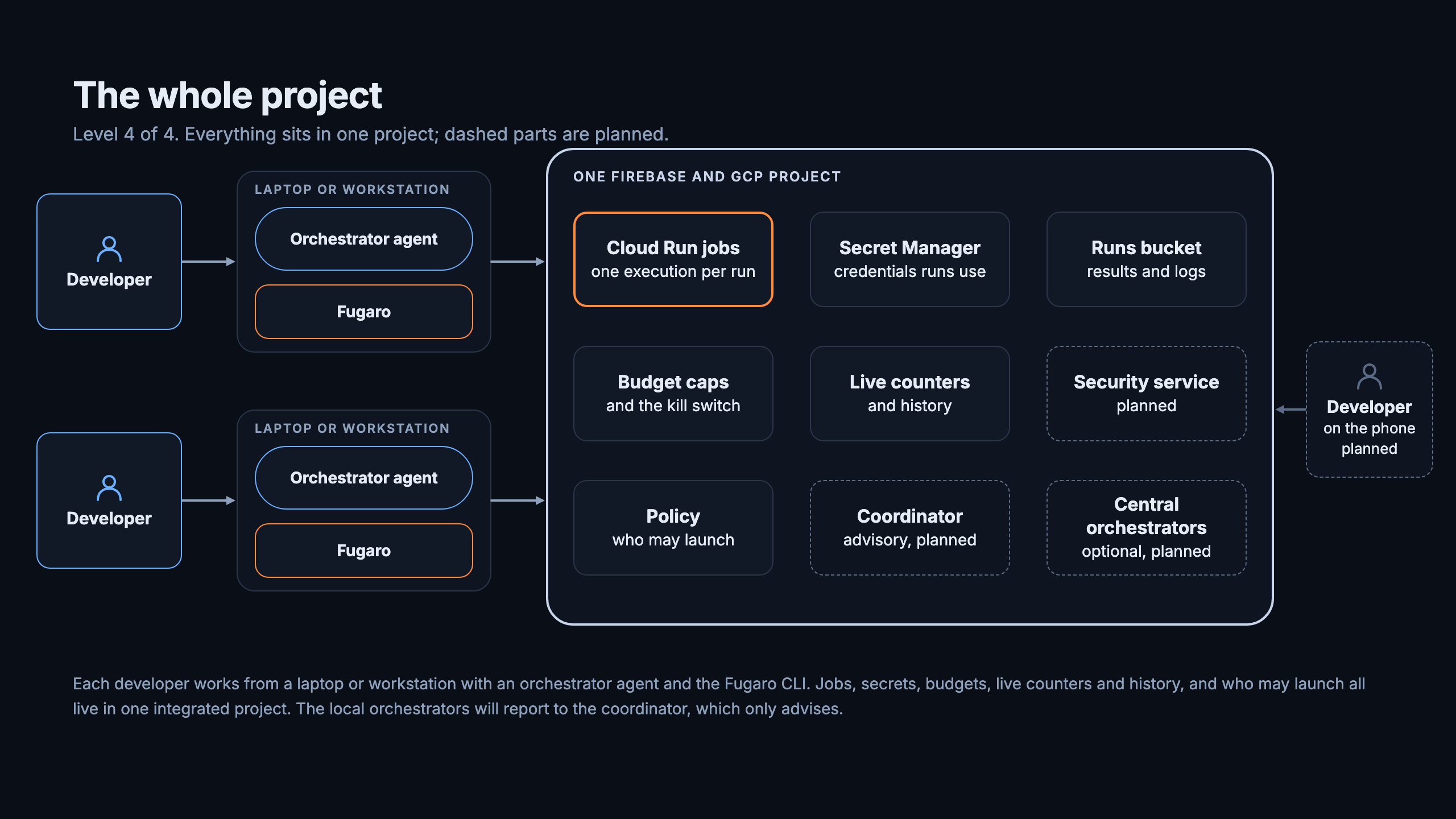
Level 4 of 4, the whole project. Each developer works from a laptop or workstation with an orchestrator agent and the Fugaro CLI. Jobs, secrets, budgets, live counters and history, and who may launch all live in one cloud project; the coordinator and central orchestrators, the security service and the phone app are planned.
The whole project

Turn a task into a pull request

In your own cloud project

Get started